Friday, May 4, 2012

Monday, April 30, 2012
Project #13 - Report on Collaboration
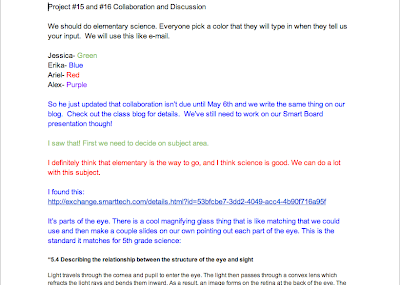
My group, Team Confused, consists of myself, Erika Conn, Jessica Bonner, and Alex Mayfield. We decided to use Google Docs to collaborate for our final project #16. Each one of us picked a different color and every time we had and idea or wanted to share something about our project, we would write it on the document and our other group members would get notified and could go on there and read it and then respond.
I really liked using Google Docs. It was so easy to communicate without ever meeting face-to-face. It was also so much easier to have our whole on-going conversation in one place instead of multiple emails. I will definitely use this application in the future!
I really liked using Google Docs. It was so easy to communicate without ever meeting face-to-face. It was also so much easier to have our whole on-going conversation in one place instead of multiple emails. I will definitely use this application in the future!

Thursday, April 26, 2012
Blog Assignment 13
E-Media Fast
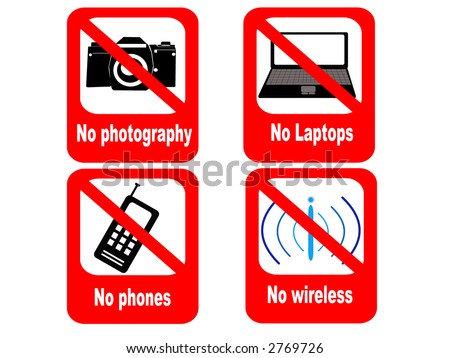
 This week's blog post was to not use any electronic entertainment or communication devices for 24 consecutive hours. These devices included: television, video records or players, computers, tablets, notepads, video cameras, audio recorders, iPads, iPods, iPhones, or any other cell phones, and no phones other than land lines. This assignment was the hardest one to accomplish by far. I depend highly on technology for almost everything I do. However, I didn't realize just how dependent I was on all of these things on a daily basis until I couldn't use them for a whole day. I use my computer for almost every assignment that I do for my classes, and I listen to the radio everyday while driving. The hardest device for me to give up was definitely my phone. I rely heavily on it. Everything I need and do is on my iPhone, from emails, text messages, internet to my calendar with everything that I have to do for that day. I hated having to use our one land line phone at my house to contact anyone if I needed to get in touch with them; texting is so much easier.
I now realize how much I take all of this technology for granted, and how much easier it makes things for me. I definitely plan on using technology forever. It is so much harder to get around our society with zero technology.
I now realize how much I take all of this technology for granted, and how much easier it makes things for me. I definitely plan on using technology forever. It is so much harder to get around our society with zero technology.
Final Report on PLN
Throughout the semester, I have been constantly adding to my PLN (Personal Learning Network). Every time I visit a site that I find interesting or helpful, I add that tile to my webmix. The tiles along the bottom, located in the middle pertain to teaching sites and sites that I plan to use in my classroom. The tiles on the bottom left are related to math, which is the subject I am going to teach. The tiles on the bottom right are not related to my career, but are shopping sites. Then, on the top right, are different types of google tools; in the middle are the basic things, like weather and a calendar. Next, the top left is places to stay up-to-date on the latest news. Lastly, the middle left is where one will find all of my social networking tools. As you can see, I have added a lot to my PLN, and I plan to keep adding more.


Tuesday, April 24, 2012
C4T #4
Tyler Rice
Mr. Rice is a science teacher at a rural public high school in Washington located on a major Indian Reservation. He feels strongly about technology integration, inquiry, research-based instructional practices, innovation, and most of all, teaching kids.
Post #1
 This week, I read Mr. Rice's post titled, "Meaningful Grading". It described how he doesn't like the standard way that teachers have graded forever. He has started a new grading technique for his classes in which he doesn't grade every assignment and homework that his students complete. Rather, at the completion of each project his students do, he has them self assess the quality of their work and the level of standard attainment. The self assessment includes a reflection on the project, a rubric, and a meeting between Mr. Rice and the student. His students also get involved in their own learning by setting learning goals through negotiations with him. All of this will increase the participation and the care of each student.
I told Mr. Rice how similar his grading strategy is to the EDM310 class I am in. We do not get grades for every project, activity, or blog post we complete. Rather, we self evaluate ourselves twice within the semester, and then come to an agreement with Dr. Strange as to what grade we deserve. I like this idea because I think it gives students a sense of freedom, where they are making more decisions on their own. Having more freedom gives students a sense of self-determination to where they want to succeed and do well.
Post #2
 Mr. Rice's post this week was called, "Depth or Breadth? Yes, Please!", which was about the debate, depth vs. breadth in education. He said that teachers' do not have to choose between depth or breadth in their classrooms. Students should be able to experience both contents to the fullest. In his 9th grade class, Mr. Rice's students studied the issue of salmon and dams along the Columbia River for six weeks. They were able to cover many science concepts by staying on this topic for a number of weeks. He said that the answer to this debate is not only depth or breadth, rather it's "asking kids to wrestle with complex, messy, challenging, real world topics." To do this, the students will need to develop a real understanding of the contents and apply it in a meaningful and memorable way.
I thought that this was an interesting post. I, too, feel that one shouldn't have to choose either breadth or depth when teaching their students. Why can't students experience both? I thought that Mr. Rice, being able to cover the issue of salmon and dams for six weeks was incredible. His students had the opportunity to experience depth, while also having breadth because he covered a lot of different science concepts in these weeks.
Mr. Rice is a science teacher at a rural public high school in Washington located on a major Indian Reservation. He feels strongly about technology integration, inquiry, research-based instructional practices, innovation, and most of all, teaching kids.
Post #1

I told Mr. Rice how similar his grading strategy is to the EDM310 class I am in. We do not get grades for every project, activity, or blog post we complete. Rather, we self evaluate ourselves twice within the semester, and then come to an agreement with Dr. Strange as to what grade we deserve. I like this idea because I think it gives students a sense of freedom, where they are making more decisions on their own. Having more freedom gives students a sense of self-determination to where they want to succeed and do well.
Post #2

I thought that this was an interesting post. I, too, feel that one shouldn't have to choose either breadth or depth when teaching their students. Why can't students experience both? I thought that Mr. Rice, being able to cover the issue of salmon and dams for six weeks was incredible. His students had the opportunity to experience depth, while also having breadth because he covered a lot of different science concepts in these weeks.
Sunday, April 22, 2012
Creativity and Curiosity: My Thoughts - Special Post #12A
Creativity and Curiosity
We were given an additional blog post this week that pertained to questions that Dr. Strange had asked us in class last week that related to creativity, curiosity, and education.

The first question was, "Do schools in the United States systematically destroy (or inhibit) the development of curiosity and/or creativity in students?" I do believe that schools destroy the development of curiosity and creativity in students. Students are only being tested on standardized tests that they are given at least every semester. Teachers are so stressed with trying to get all of the information to the students in time for the next test, so they don't have time to let students show their creativity or curiosity. Standardized tests only have one right answer, thus preventing students from showing their imagination.
The second question was, "Can a curriculum be developed that increases the curiosity of students? If so, what would be the key components of such a curriculum?" I do think that a curriculum could be developed that increases the curiosity of students. I think that of course, we need to get rid of standardized testing, but that will be a hard one to do. We could, however, encourage students to get more involved in the class and make our class more comforting so that students are not afraid to speak up and share their opinions. Also, to increase their imagination, we need to allow students to brainstorm in order to form their own thoughts and answers to questions.
 The next question said, "Can a teacher's actions increase the curiosity of students? If so, what would be those actions?" I think that teachers can definitely increase the curiosity of students. Especially in early grade levels, students look up to and admire their teachers, so they take almost everything their teachers' say as gold. We need to help mold our students to think and form their own opinions, and to use their imagination how they want. I don't want my students to only soak in what I tell them, but to also make their own assumptions.
Lastly, question four asked, "What would help you become more curious and/or creative? What role would teachers and/or schools have in that process?" In order to become more curious and creative, I need to not be afraid to try new things and to be afraid of rejection for my ideas. If I cannot do these things, then how am I suppose to expect my students to? We need to supply opportunities so that our students can show their creativity more at school. This means, providing more activities and projects that the students have more of a say in. We could even allow our students to make up some assignments on their own.
We were given an additional blog post this week that pertained to questions that Dr. Strange had asked us in class last week that related to creativity, curiosity, and education.

The first question was, "Do schools in the United States systematically destroy (or inhibit) the development of curiosity and/or creativity in students?" I do believe that schools destroy the development of curiosity and creativity in students. Students are only being tested on standardized tests that they are given at least every semester. Teachers are so stressed with trying to get all of the information to the students in time for the next test, so they don't have time to let students show their creativity or curiosity. Standardized tests only have one right answer, thus preventing students from showing their imagination.
The second question was, "Can a curriculum be developed that increases the curiosity of students? If so, what would be the key components of such a curriculum?" I do think that a curriculum could be developed that increases the curiosity of students. I think that of course, we need to get rid of standardized testing, but that will be a hard one to do. We could, however, encourage students to get more involved in the class and make our class more comforting so that students are not afraid to speak up and share their opinions. Also, to increase their imagination, we need to allow students to brainstorm in order to form their own thoughts and answers to questions.

Lastly, question four asked, "What would help you become more curious and/or creative? What role would teachers and/or schools have in that process?" In order to become more curious and creative, I need to not be afraid to try new things and to be afraid of rejection for my ideas. If I cannot do these things, then how am I suppose to expect my students to? We need to supply opportunities so that our students can show their creativity more at school. This means, providing more activities and projects that the students have more of a say in. We could even allow our students to make up some assignments on their own.
Progress Report on Final Project

I am part of the group, "Team Confused," which consists of myself, Erika Conn, Jessica Bonner, and Alex Mayfield. For our final project, we are going to create a video focusing on how to survive EDM 310. We are still discussing what all we are going to actually cover, but we know that we will include the following so far:
(1) Time management
(2) Read the class blog DAILY
(3) Submit all work ON TIME
(4) Constantly update your Personal Learning Network (PLN)
(5) Take advantage of the lab and the lab assistants! You get a lot of work done, and people are there to help you.
We are continuing to increase the list as we think of more things to add; for example, we hope to incorporate Dr. Strange into our video somewhere.
Thursday, April 19, 2012
Blog Assignment 12
My Assignment
This week, we were suppose to come up with our own assignment that Dr. Strange should have assigned for us to do in our own specialty. I remembered the website, Web 2.0 that has many different kinds of tools that can be useful in classrooms. I found Dabbleboard, which is an online collaboration application that is centered around whiteboards. Since I am a math major, I drew area formulas used in geometry. It was pretty simple and fun to draw out all of the shapes and write the formulas beside the corresponding shapes. There is also a great video that gives a tour of how to work and navigate Dabbleboard.
Here is what I drew on my whiteboard:
 For the assignment in EDM 310, if I were Dr. Strange, I would have all students make a Dabbleboard that relates to their field of study, and that could be used in a classroom setting. After making their whiteboard, each student should write at least one paragraph explaining Dabbleboard and if they liked it or not. They should state if this is something that they could see themselves using as future educators.
This week, we were suppose to come up with our own assignment that Dr. Strange should have assigned for us to do in our own specialty. I remembered the website, Web 2.0 that has many different kinds of tools that can be useful in classrooms. I found Dabbleboard, which is an online collaboration application that is centered around whiteboards. Since I am a math major, I drew area formulas used in geometry. It was pretty simple and fun to draw out all of the shapes and write the formulas beside the corresponding shapes. There is also a great video that gives a tour of how to work and navigate Dabbleboard.
Here is what I drew on my whiteboard:

Tuesday, April 17, 2012
C4K Summary for April

C4K #7
Over the next three weeks, I will have the privilege of commenting on a twelve year old's blog, Jane K., from the United States. Her interest are sports and P.E. Her blog that I commented on this week was title "My Avatar", and she described what her avatar looked like. It wore a green shirt because green is her favorite color, with white shorts. Her hair was also in a ponytail because that's typically how she wears it. She also had angel wings because ever since she was little, she has always wanted to fly like Superman.
I think that I got to learn a lot about Jane just by her avatar. I was able to get a picture in my head of what I think she looks like. I told her that I also wear my hair in a ponytail a lot too just because it's the easiest thing for me when I don't have much time to get ready. I think that, like her, many people have wished to have wings so that they could fly around like the superhero everyone loves. I looked at a few of her other blogs as well, and I think that she is doing well so far in the Blogging Challenge.
C4K #8
For the Blogging Challenge this week, Jane wrote about the "Invisible Children", and how compassionate she felt about the cause. For the past 25 years, children have been abducted and made to fight in the war in Central Africa. She described how fast the children can be abducted: "one minute laughing with their friends, and the next, walking through a forest with a gun." She wants to help and told everyone that they could help by donating. She gave links to the videos and also to the Invisible Children blog. She finished her post by saying, shouldn't all kids in Africa be happy?
I told her that I was so glad that she wrote about Kony 2012. This is something that I actually have an interest in and feel very compassionate about. When I heard about this about a month ago, I immediately watched the video and I was deeply touched. I said that I thought a change needed to be made because yes, all kids should be as happy in Africa as we are here in America.
C4K #9
This last week of participating in the Blogging Challenge, I read Jane's post called "One Thing About Me". She said that she had a lot of great qualities, but the one that stood out the most to her was her hyperness. She's very active and extremely loud, most of the time. She said that after people have been around her, they either have more energy or are more tired. Jane thinks that people that have more energy are more fun to be around.
I told Jane that I love that her favorite quality about herself is her hyperness. Being energetic and happy as a kid is so important. I know that she brings her family and friends so much joy, and that she is the person that everyone wants around when they are having a bad day because she is sure to put a smile on their face.
C4K #10
I had the privilege of commenting on a first grader named Chloe's blog this week. She is a student in Ms. Kathy Cassidy's class in Canada. Her post was actually a video called, "Rules, Relationships, and Responsibilities". She explained each one and gave examples of each. She said that one of her responsibilities was to not tear her shorts. Then, she described a relationship with one of her friends, and then told us some of the rules she has to follow. She said that at school, she isn't allowed to get on the ice or the big hill.

I shared some of my "rules, relationships, and responsibilities" with her in my comment. I told her that I have a responsibility to be at work on time and to attend my classes so that I will pass my tests. Then I told her that I have many relationships that mean a lot to me. Lastly, I told her that we all have rules we have to follow, one of them being that we aren't suppose to cheat at school. I said that we have a lot in common because we both share these three R's. Her video was very good!
C4K #9
This last week of participating in the Blogging Challenge, I read Jane's post called "One Thing About Me". She said that she had a lot of great qualities, but the one that stood out the most to her was her hyperness. She's very active and extremely loud, most of the time. She said that after people have been around her, they either have more energy or are more tired. Jane thinks that people that have more energy are more fun to be around.
I told Jane that I love that her favorite quality about herself is her hyperness. Being energetic and happy as a kid is so important. I know that she brings her family and friends so much joy, and that she is the person that everyone wants around when they are having a bad day because she is sure to put a smile on their face.
C4K #10
I had the privilege of commenting on a first grader named Chloe's blog this week. She is a student in Ms. Kathy Cassidy's class in Canada. Her post was actually a video called, "Rules, Relationships, and Responsibilities". She explained each one and gave examples of each. She said that one of her responsibilities was to not tear her shorts. Then, she described a relationship with one of her friends, and then told us some of the rules she has to follow. She said that at school, she isn't allowed to get on the ice or the big hill.
I shared some of my "rules, relationships, and responsibilities" with her in my comment. I told her that I have a responsibility to be at work on time and to attend my classes so that I will pass my tests. Then I told her that I have many relationships that mean a lot to me. Lastly, I told her that we all have rules we have to follow, one of them being that we aren't suppose to cheat at school. I said that we have a lot in common because we both share these three R's. Her video was very good!
Friday, April 13, 2012
Blog Assignment 11
First Graders in Ms. Cassidy's class and Skype Interview with Ms. Cassidy
Ms. Cassidy, a first grade teacher in Canada, made a video with her students called, "Little Kids...Big Potential", in which they illustrated how they use technology to learn in their classroom. They used blogs, Wikis, Skype, Nintendo DS, a classroom webpage, and videos to share, collaborate, and learn. It was incredible to see how much these kids know about technology at only the age of six. I'm sure they could probably teach me a few things about computers and the internet.

Dr. Strange and his class also skyped with Ms. Cassidy and asked her questions about her teaching strategies. She gave some great tips that we should follow as future educators. She explained how she has become such a supporter of Twitter, and how it has helped her connect with so many people all around the world. She also expressed how important a Personal Learning Network is to our careers. They allow us to find information and to talk to, and stay connected with, educators everywhere. Another tip she gave us was to start using technology with something that we enjoy doing. If we like to write, then we should blog; if we like pictures, we should use Flickr, and so on.
I think Ms. Cassidy's approach to the use of technology in the classroom is brilliant! Allowing students to use technology, which they are so comfortable with now-a-days, and to have more freedom in assignments will make them enjoy school more; hence, they will learn more because they are actually enjoying it. I like that her class used videos, such as Skype, to learn because they could have face-to-face conversations with other students and teachers from all around the world.
 The technique that I would be most likely to implement in my classroom is blogging. I think that students can do so much with this powerful tool. They can blog about what they learned that week, ask questions to have other classmates answer, and can stay connected with so many other students. An impediment that I'm sure I'm going to have with my classes is the students getting on websites that are not educational. I will have to have strict rules for this and consequences that will result if they do not follow my rules.
There will also be many benefits to adopting some of Ms. Cassidy's teaching strategies. My students will probably be more willing to come to class to learn because they actually like using technology. They will have more freedom in the way they complete their assignments, thus increasing self-determination, which will make them strive to succeed. Ms. Cassidy's ways of teaching are great, and I will definitely be implementing some of them into my own techniques.
Ms. Cassidy, a first grade teacher in Canada, made a video with her students called, "Little Kids...Big Potential", in which they illustrated how they use technology to learn in their classroom. They used blogs, Wikis, Skype, Nintendo DS, a classroom webpage, and videos to share, collaborate, and learn. It was incredible to see how much these kids know about technology at only the age of six. I'm sure they could probably teach me a few things about computers and the internet.

Dr. Strange and his class also skyped with Ms. Cassidy and asked her questions about her teaching strategies. She gave some great tips that we should follow as future educators. She explained how she has become such a supporter of Twitter, and how it has helped her connect with so many people all around the world. She also expressed how important a Personal Learning Network is to our careers. They allow us to find information and to talk to, and stay connected with, educators everywhere. Another tip she gave us was to start using technology with something that we enjoy doing. If we like to write, then we should blog; if we like pictures, we should use Flickr, and so on.
I think Ms. Cassidy's approach to the use of technology in the classroom is brilliant! Allowing students to use technology, which they are so comfortable with now-a-days, and to have more freedom in assignments will make them enjoy school more; hence, they will learn more because they are actually enjoying it. I like that her class used videos, such as Skype, to learn because they could have face-to-face conversations with other students and teachers from all around the world.

There will also be many benefits to adopting some of Ms. Cassidy's teaching strategies. My students will probably be more willing to come to class to learn because they actually like using technology. They will have more freedom in the way they complete their assignments, thus increasing self-determination, which will make them strive to succeed. Ms. Cassidy's ways of teaching are great, and I will definitely be implementing some of them into my own techniques.
Saturday, April 7, 2012
Blog Assignment 10
Do You Teach or Do You Educate?
This video, made for teachers at Foothill College Krauss Center for Innovation in Los Altos, CA., deciphers between what makes an individual a teacher versus an educator. It starts off by asking, "are you a teacher?", and then gives many different versions of the definition 'teach'. Then, it asks, "or are you an educator?". Many inspirational words begin to pop up describing what an educator is. These sound so much better than the negative definitions of 'teach'. Educators are more than just teachers who are there to show and explain how to do something. To be an educator, one must be a mentor, a guide, an advisor, support, and much more. Educators are there to advise and show the way to their students. They also give intellectual, moral, and social instructions.

I do intend to educate rather than just teach my students. I became an education major because I truly want to make an impact in someone's life. I want to train students for the future in order to better our society. Today's students are not really learning anything at school because they have so many standardized tests that they are forced to take. So, rather than actually learning, they are simply memorizing only the material that is going to be on the next quarterly standardized test. However, once the tests have been completed, all of the material that the students crammed in their heads is now history, gone like they had never learned it.
I want this to change! I want students in my classroom actually learning and taking in what they observe and participate in themselves. I want my students to be active learners rather than passive. I think that the best way to learn something is by actually doing the task yourself. So, my students will be discovering many things on their own by actually doing them, instead of being spoon fed every step.
Tom Johnson's Don't Let Them Take the Pencils Home!
 In this blog post, Gertrude, with a prestigious sounding title: the School Curriculum Instructional Interventionist Academic Specialist, tells Mr. Johnson that he cannot continue to let his students take home pencils and paper. She says that an article has proven that students from low income neighborhoods have lower standardized test scores when they are allowed to take home paper and pencils because they use the pencils for entertainment purposes rather than learning. Mr. Johnson told her that he wants to change how his students see pencils and show them how they are really suppose to be used.
He started a parent pencil program, where the parents actually learn the skills that are being taught to the students. He explained ways that pencils can be used for learning to both the parents and the students. Gertrude said that the students are probably at home playing 'stupid' games like hangman or something with their pencils instead of learning. Mr. Johnson told her that he doesn't discourage them from playing hangman or other games and activities because regardless of if they can see it or not, the children are actually learning in some way.
I am definitely on Mr. Johnson's side of this argument. Who has ever thought that students taking home pencils and paper would be problematic?? I think that Mr. Johnson is using pencils as a metaphor for technology, really. Students often see computers, Ipods, and other media tools as sources for entertainment, but they can really be used for so much more. Computers are becoming so important in regards to class assignments and projects. Almost everything that a student has to do for school will involve the computer at least once before the assignment is complete.
![chalkboard with]() Part of our job as educators is to show students how technology can actually help them learn, while also being entertaining. Learning doesn't have to be boring; it should be fun! So, why not incorporate it with things that students love (technology)? School should not be about standardized testing and competing for what school has the best scores. It should be more about who has the best instructions and applications to go out and face the real world. We are training students to function and to make an impact in our future society, not for who can memorize and bubble in the best on the next standardized test.
This video, made for teachers at Foothill College Krauss Center for Innovation in Los Altos, CA., deciphers between what makes an individual a teacher versus an educator. It starts off by asking, "are you a teacher?", and then gives many different versions of the definition 'teach'. Then, it asks, "or are you an educator?". Many inspirational words begin to pop up describing what an educator is. These sound so much better than the negative definitions of 'teach'. Educators are more than just teachers who are there to show and explain how to do something. To be an educator, one must be a mentor, a guide, an advisor, support, and much more. Educators are there to advise and show the way to their students. They also give intellectual, moral, and social instructions.

I do intend to educate rather than just teach my students. I became an education major because I truly want to make an impact in someone's life. I want to train students for the future in order to better our society. Today's students are not really learning anything at school because they have so many standardized tests that they are forced to take. So, rather than actually learning, they are simply memorizing only the material that is going to be on the next quarterly standardized test. However, once the tests have been completed, all of the material that the students crammed in their heads is now history, gone like they had never learned it.
I want this to change! I want students in my classroom actually learning and taking in what they observe and participate in themselves. I want my students to be active learners rather than passive. I think that the best way to learn something is by actually doing the task yourself. So, my students will be discovering many things on their own by actually doing them, instead of being spoon fed every step.
Tom Johnson's Don't Let Them Take the Pencils Home!

He started a parent pencil program, where the parents actually learn the skills that are being taught to the students. He explained ways that pencils can be used for learning to both the parents and the students. Gertrude said that the students are probably at home playing 'stupid' games like hangman or something with their pencils instead of learning. Mr. Johnson told her that he doesn't discourage them from playing hangman or other games and activities because regardless of if they can see it or not, the children are actually learning in some way.
I am definitely on Mr. Johnson's side of this argument. Who has ever thought that students taking home pencils and paper would be problematic?? I think that Mr. Johnson is using pencils as a metaphor for technology, really. Students often see computers, Ipods, and other media tools as sources for entertainment, but they can really be used for so much more. Computers are becoming so important in regards to class assignments and projects. Almost everything that a student has to do for school will involve the computer at least once before the assignment is complete.

Sunday, April 1, 2012
Blog Assignment 9
Mr. McClung's Reflection Posts
Mr. Joe McClung is a fairly new teacher who has only been teaching for four years. After his first year of teaching in Noel, Missouri, he decided that he would write a blog post reflecting on his adventures, accomplishments, and learnings.

At The Teacher's Desk - What I've Learned This Year (2008-09)
The first post I read was from Mr. McClung's very first year of teaching in Noel, Missouri. He shared all that he learned from his first year. He explained how we should read our crowd, and that we shouldn't have the mindset that it is all about the teacher. If we are so worried about what our administrators will think, we will lose touch with the audience that we are trying to relay our lesson to. We should lead a student-centered classroom where the most important aspect of teaching shines through: checking for student comprehension. He says that "in order to be effective, you have to be willing to let your audience drive your instruction."
We have to learn to be flexible. Teachers like to have 'perfect' lessons planned, but only seldom does perfection result because the lesson we teach and the one we plan are always going to be different. We can't control what is going to happen in our classroom to alter our lesson plans, but we can control how we handle the changes. We have to learn to not let the lack of perfection bother us and to just go with the flow, no matter how hard that may be.
Mr. McClung tells us that we need to be reasonable. Our students are not going to reach every goal that we have made for them, but we can't beat them up for it. We need to always be encouraging and to give them support so that they won't be afraid to answer questions or come to us for guidance.
We don't need to be afraid of technology, but rather embrace it. Mr. McClung says that technology is essential to living in our "microwave" society of today. We shouldn't become overwhelmed with it and want to give up all at once. It takes time to master, but once we do, it will be well worth the headache that we went through. The last advice that he gave us was to never stop learning. We should always want to get better and grow as professional educators.
I really learned a lot from Mr. McClung's first blog post. I only hope that I can come away with that much knowledge and understanding after only my first year of teaching. I know that the first couple of years are going to be challenging and I am going to want to give up numerous times, but Mr. McClung has helped remind me that I will not be in this alone and that the price will be well worth it when my students leave my class well prepared for what lies ahead of them in the future.
At The Teacher's Desk - What I've Learned This Year (2010-2011)
The second post I read was a reflection of Mr. McClung's third year of teaching. There were a lot of firsts for him this year. It was his first year to teach at the same school for more than a year, he experienced being a head coach, coached cross-country, and taught computer applications. All of these firsts led to many valuable experiences that he was able to learn from.
He says that we should know who our boss is. We shouldn't worry too much about trying to please everyone on a daily basis because it becomes very easy to get wrapped up in what people think of us. This one is hard for me because I have always been a people pleaser; I hate for anyone to be upset with me. If we try to please everyone, the people that matter the most will get left out, our students. Mr. McClung also states that we need to leave behind what is going on in our professional and personal lives in order to give our students our complete attention and the education experience that they deserve.

We shouldn't expect others to be as excited about change as we are, and we can't be afraid to be an outsider. Sometimes being optimistic can create barriers in the teaching profession because some teachers don't like change and therefore, are not willing to give new ideas a chance. Mr. McClung tells us that we cannot let others down our excitement and joy that we get from teaching or anything else in life. You can't let others steer you away from what you enjoy about teaching; never let your light burn out. He also says that in order to stay true to ourselves and to not fall in line with the rest of the crowd, we cannot be afraid of being called an outsider. It's better, and more beneficial to be an outsider and to focus on our students rather than seeking approval from other teachers.
The last thing that Mr. McClung left us with is to not get comfortable. He says that our biggest fear as teachers should be becoming comfortable. In order to not become too comfortable as the years pass by and we gain teaching experience, we need to alter our lesson plans and how we teach. We should add new things into our agenda that we've never done or taught before. We should always want to keep moving our professional careers forward and to be active in education, willing to be 'movers and shakers' and ready for the changes needed in our schools.
Not only does Mr. McClung offer great advice about teaching, he also gives advice about life in general. We have to be willing to put everything else in our lives aside when we are in our classrooms teaching our students because they should always be our number one priority. Mr. McClung has made me even more eager to start teaching so that I can start sharing advice with future educators after me, and to begin to have an impact in students' lives.
Tuesday, March 27, 2012
C4K Summary for March

C4K #6
I commented on a post titled "On Saturday by Jude", which was by a young boy named Jude who attends Bradford Schools. His post was about a saturday that he spent with his father. He said that they went to an exhibition on legos, but the only tickets they could buy for that day were for 4:20 pm. So, he told us everything that he and his father did to pass the time before they could go play with the legos. They went and bought him new school shoes, went and ate at a cafe, and even stopped to buy his mother flowers and chocolates for Mother's Day. Finally, it was 4:15 and they went inside the lego exhibition and built houses that were under construction, and had a blast!
I told him that a lego exhibition sounds like so much fun. When we were younger, my brother use to play with legos all the time and I always tried to play with him, but of course he hated that. I also told him that it was so sweet that he and his father bought his mother flowers and chocolates for Mother's Day because we all need to show our appreciation for our mothers.
C4T #3
Jabiz Raisdana - Intrepid Teacher
This "Intrepid Teacher" is a writer, musician, filmmaker, photographer, and everything else rolled into one. He loves exploring the internet and finding new and interesting things to share with his students, co-workers, and network friends. Raisdana also states that he is an intensive storyteller, and he has a story to tell and share with all of us, and we can start reading the story by following his trail that has been left all over the internet.
Post #1
 In this post called, "Copy Wrong", Jabiz Raisdana expressed his frustrations with EMI and Youtube. His tenth grade class was assigned a project based on the the film The Wall by Pink Floyd. They were suppose to make a video for the project and either make up their own song or use songs from the video, and most of the students chose to use songs that were already provided because of the lack of time. However, when the students uploaded their videos to YouTube, the videos were blocked because the songs were copyrighted. Raisdana was frustrated because of this and sought to find a solution. His students were not trying to make money off of these videos or songs in no way; they were only using them for educational purposes.
I told Raisdana that I am studying to be a math teacher and that I found his post to be interesting because even though I am going to be teaching math, I still want my students to use technology. I am going to assign them projects that require the use of the internet. Reading his post and seeing everything he had to go through just to get the videos viewable on YouTube, has prepared me for some of the things I may encounter when I begin teaching. I thanked him for sharing his frustrations with us.
Post #2
"Give a Kid a Blog" is all about just what it sounds like. This week, Jabiz Raisdana discussed how he thought that children, grades K-10, should have blogs so that they can share their work and projects with the world, instead of just throwing them in the trash when they are done presenting them. He said that blogs would help students learn how to be just as independent online as they are off. Blogs would allow for students to present and talk to peers face-to-face, while also creating permanent portfolios of their online work. He says that these skills are what people mean when they talk about 21st century skills.
![a kid is sitting down, on a laptop, with the word]()
In my comment, I said that the EDM 310 class I am taking now is all about technology. We each have our own class blog where we write at least one blog post every week, along with projects and activities that we do and then post to our blog. I love the fact that what I do and produce is being shared, not just with my classmates, but the whole world. I said that it would be a good idea if all students would try blogging. That way, all of their projects that they work so hard on are not lost, but are around forever.
This "Intrepid Teacher" is a writer, musician, filmmaker, photographer, and everything else rolled into one. He loves exploring the internet and finding new and interesting things to share with his students, co-workers, and network friends. Raisdana also states that he is an intensive storyteller, and he has a story to tell and share with all of us, and we can start reading the story by following his trail that has been left all over the internet.
Post #1

I told Raisdana that I am studying to be a math teacher and that I found his post to be interesting because even though I am going to be teaching math, I still want my students to use technology. I am going to assign them projects that require the use of the internet. Reading his post and seeing everything he had to go through just to get the videos viewable on YouTube, has prepared me for some of the things I may encounter when I begin teaching. I thanked him for sharing his frustrations with us.
Post #2
"Give a Kid a Blog" is all about just what it sounds like. This week, Jabiz Raisdana discussed how he thought that children, grades K-10, should have blogs so that they can share their work and projects with the world, instead of just throwing them in the trash when they are done presenting them. He said that blogs would help students learn how to be just as independent online as they are off. Blogs would allow for students to present and talk to peers face-to-face, while also creating permanent portfolios of their online work. He says that these skills are what people mean when they talk about 21st century skills.

In my comment, I said that the EDM 310 class I am taking now is all about technology. We each have our own class blog where we write at least one blog post every week, along with projects and activities that we do and then post to our blog. I love the fact that what I do and produce is being shared, not just with my classmates, but the whole world. I said that it would be a good idea if all students would try blogging. That way, all of their projects that they work so hard on are not lost, but are around forever.
Monday, March 26, 2012
Thursday, March 22, 2012
Blog Assignment 8
This Is How We Dream by Richard Miller
Both of these videos, parts 1 and 2, by Richard Miller of Rutgers University are phenomenal! He describes how writing with multi-media can show how to change from a reading/writing culture to a listening/watching culture, and still have students contribute to what they are listening to and watching. Students can now write a whole research paper without ever even stepping foot into a library because they now have all the resources they need and many more right on their computers and the internet. They can find whatever information they need to support their thesis, and can also find websites to libraries not only in their town, but all over the word to help contribute to their paper. These library websites are capable of suppling books and articles on the web, so that students can find what they need easier and faster. Using multi-media, students would also be able to work on their assignments at any time, anywhere because one can access the internet from any computer that is available to them. Using the internet also allows for someones work to be shared to billions of people all around the world. Multimedia can be such a powerful tool!

I think that using multimedia to better enhance one's education is a great idea. I feel that so many of us students are already using so much multimedia today. I rely on my computer almost 100 percent to get my assignments done. When I do not have my computer with me, I almost feel helpless and I can barely get anything accomplished for my classes. The EDM310 class we are taking now, heavily revolves around the use of technology, so everything we do for this class requires a computer and the internet. Writing with multi-media is something that I think most people would welcome, with very few people having regrets.
I would like to think that I am prepared for multimedia because, like I said earlier, I already use technology so much that I think this would only help my success even more. I also think that my students will be able to use this, probably even better than I will. Students these days use the internet for almost everything they do, and tend to be so tech savvy. By the time I begin to teach, the children will be so use to using multimedia that it will just come natural to them. So, let's embrace multimedia and writing with multi-media!
Blog Post #12 by Carly Pugh
Carly's post for her blog post #12 is suppose to be about making an assignment that is so good and creative that Dr. Strange should have made them do it themselves, or that he will possibly have his students do in the future. Her assignment that she made up is for everyone to make their own YouTube playlist that will describe their philosophies as a teacher. The playlist with videos should include things like: describe the kind of teacher you would like to be, offer tips on classroom management, find topics related to your field of study, and much more. She asked that the students include at least five of the topics she listed and a minimum of ten videos. Then, everyone should explain how these things that they have chosen contribute to their teacher philosophy and how they can use these in their teaching environment.

I think that a YouTube playlist is a great idea. Having a playlist would allow us to put all of the videos that we think are interesting into one place for fast and convenient access. These videos and topics would be useful for us in the beginning of our careers to serve as guidance, but they can also help us at any time in our careers and can give us fun and creative ideas for activities and projects that we can do with our students. I will have a YouTube playlist very soon! :)
The Chipper Series and EDM310 for Dummies
 The Chipper Series is about one of Dr. Strange's past students, named Chipper, who dropped out of school because she didn't want to have to learn. She told Dr. Strange that she wanted him to teach her so that she didn't have to learn. After quitting school, she had numerous jobs that she eventually got fired from. She then decided to start her own school called Timeline Pilot School, where the students could take a course for however long or short they wanted to and could show up for the class when they wanted. Needless to say, this school didn't last very long before it was shut down. Chipper finally had a mental cleansing after this where she learned the value of education, and decided that she wanted to go back to school. This time, she was determined to go to school everyday, do all of her assignments, and not procrastinate. She was ready to get the most out of her education experience.
In the video, EDM310 for Dummies, students illustrate their frustrations for their class, EDM310. They were going crazy over the assignments and projects that were due because they didn't understand or know how to do any of them. Then, finally, they came across a book titled EDM310 for Dummies. This book had everything one needs to know about this course, from every blog post assignment and project to how to operate all of the websites that were required. After these students started reading this book and looking to it for guidance, they actually started to really enjoy the class and all of the projects.

Before I even started this course and a few weeks into it, I was terrified and overwhelmed with everything that was required for us to do. So, I can definitely relate to these two videos. However, as the weeks progressed and I started to get the hang of things, I began to like it. I know that this course will have such a tremendous impact on my teaching career and how I incorporate technology and run things in my classroom.
Thinking about a video that I would like to create or participate in, I think I would want to reflect on the things that we have learned thus far in this class. We could be in a classroom setting, where we are teaching and using our past assignments to educate our students. A project like this would illustrate just how useful this class can be to our future careers.
Learn to Change, Change to Learn
This video is basically attacking schooling as we think of it today. There was a poll taken of 55 industry sectors that were ranked by their level of IT intensiveness and education came in last at number 55, below coal mining. In one way, this is mind-boggling, but in another, I can totally see this. Everything around us is adapting and welcoming technology except for schools, which should be one of the top places that uses technology frequently. The guys in this video say that the new 21st century set of literacies are not how well you remember information, but rather, do you know how to find information, problem-solve, how to validate info, synthesize, collaborate, and communicate.

The idea of education is dying, but the idea of learning is just beginning. This video is so powerful and points out so many fascinating arguments. Students need to be taught and trained in a way that will prepare them for their future jobs, not the next test they will be taking. Standardized tests do nothing to help a student train for the future, they only cram information into their heads until the test is taken and then everything is forgotten. This shouldn't be how education is. It is our job as future educators to realize what it is that students need to learn, and the use of technology will help us out tremendously.
Scavenger Hunt 2.0
Web 2.0 is just fascinating! There are so many tools available for teachers and students for free or of very little cost and the tools are so broad. These tools allow one to collaborate, edit, and share content online. This will definitely be a site that I visit frequently when I begin teaching.
(1) Edmodo looks almost identical to Facebook. It is a place where a teacher can turn his or her classroom into a community. Teachers can communicate with their students and parents, post grades, post assignments and tests, make calendars with upcoming events, and produce polls that students can take. I love this site and will be using it for my classroom. I've already made an account. :)
(2) PhotoPeach is a fun video tool that would be great for teachers and students to use. One can combine images, music, and text into a presentation. It is pretty simple and students can have a great presentation ready within minutes. Teachers can use this as a way to have collaborative group work because there is a quiz feature that allows multiple-choice questions to be on all or some of the slides in the slideshow. There are so many possibilities with PhotoPeach.
(3) Poll Everywhere is a website where people can make polls and respond to them using their mobile devices. It makes it easy to gather live responses from just about anywhere: conferences, presentations, classrooms, radio, tv, and print. It can also help people raise money by letting them pledge via text. I found this site to be fun! I could find a lot of use out of polls in my math classes, by making questions into a poll and having my students use mobile devises to answer.
Here's my first poll that I made:
Both of these videos, parts 1 and 2, by Richard Miller of Rutgers University are phenomenal! He describes how writing with multi-media can show how to change from a reading/writing culture to a listening/watching culture, and still have students contribute to what they are listening to and watching. Students can now write a whole research paper without ever even stepping foot into a library because they now have all the resources they need and many more right on their computers and the internet. They can find whatever information they need to support their thesis, and can also find websites to libraries not only in their town, but all over the word to help contribute to their paper. These library websites are capable of suppling books and articles on the web, so that students can find what they need easier and faster. Using multi-media, students would also be able to work on their assignments at any time, anywhere because one can access the internet from any computer that is available to them. Using the internet also allows for someones work to be shared to billions of people all around the world. Multimedia can be such a powerful tool!

I think that using multimedia to better enhance one's education is a great idea. I feel that so many of us students are already using so much multimedia today. I rely on my computer almost 100 percent to get my assignments done. When I do not have my computer with me, I almost feel helpless and I can barely get anything accomplished for my classes. The EDM310 class we are taking now, heavily revolves around the use of technology, so everything we do for this class requires a computer and the internet. Writing with multi-media is something that I think most people would welcome, with very few people having regrets.
I would like to think that I am prepared for multimedia because, like I said earlier, I already use technology so much that I think this would only help my success even more. I also think that my students will be able to use this, probably even better than I will. Students these days use the internet for almost everything they do, and tend to be so tech savvy. By the time I begin to teach, the children will be so use to using multimedia that it will just come natural to them. So, let's embrace multimedia and writing with multi-media!
Blog Post #12 by Carly Pugh
Carly's post for her blog post #12 is suppose to be about making an assignment that is so good and creative that Dr. Strange should have made them do it themselves, or that he will possibly have his students do in the future. Her assignment that she made up is for everyone to make their own YouTube playlist that will describe their philosophies as a teacher. The playlist with videos should include things like: describe the kind of teacher you would like to be, offer tips on classroom management, find topics related to your field of study, and much more. She asked that the students include at least five of the topics she listed and a minimum of ten videos. Then, everyone should explain how these things that they have chosen contribute to their teacher philosophy and how they can use these in their teaching environment.

I think that a YouTube playlist is a great idea. Having a playlist would allow us to put all of the videos that we think are interesting into one place for fast and convenient access. These videos and topics would be useful for us in the beginning of our careers to serve as guidance, but they can also help us at any time in our careers and can give us fun and creative ideas for activities and projects that we can do with our students. I will have a YouTube playlist very soon! :)
The Chipper Series and EDM310 for Dummies

In the video, EDM310 for Dummies, students illustrate their frustrations for their class, EDM310. They were going crazy over the assignments and projects that were due because they didn't understand or know how to do any of them. Then, finally, they came across a book titled EDM310 for Dummies. This book had everything one needs to know about this course, from every blog post assignment and project to how to operate all of the websites that were required. After these students started reading this book and looking to it for guidance, they actually started to really enjoy the class and all of the projects.

Before I even started this course and a few weeks into it, I was terrified and overwhelmed with everything that was required for us to do. So, I can definitely relate to these two videos. However, as the weeks progressed and I started to get the hang of things, I began to like it. I know that this course will have such a tremendous impact on my teaching career and how I incorporate technology and run things in my classroom.
Thinking about a video that I would like to create or participate in, I think I would want to reflect on the things that we have learned thus far in this class. We could be in a classroom setting, where we are teaching and using our past assignments to educate our students. A project like this would illustrate just how useful this class can be to our future careers.
Learn to Change, Change to Learn
This video is basically attacking schooling as we think of it today. There was a poll taken of 55 industry sectors that were ranked by their level of IT intensiveness and education came in last at number 55, below coal mining. In one way, this is mind-boggling, but in another, I can totally see this. Everything around us is adapting and welcoming technology except for schools, which should be one of the top places that uses technology frequently. The guys in this video say that the new 21st century set of literacies are not how well you remember information, but rather, do you know how to find information, problem-solve, how to validate info, synthesize, collaborate, and communicate.

The idea of education is dying, but the idea of learning is just beginning. This video is so powerful and points out so many fascinating arguments. Students need to be taught and trained in a way that will prepare them for their future jobs, not the next test they will be taking. Standardized tests do nothing to help a student train for the future, they only cram information into their heads until the test is taken and then everything is forgotten. This shouldn't be how education is. It is our job as future educators to realize what it is that students need to learn, and the use of technology will help us out tremendously.
Scavenger Hunt 2.0
Web 2.0 is just fascinating! There are so many tools available for teachers and students for free or of very little cost and the tools are so broad. These tools allow one to collaborate, edit, and share content online. This will definitely be a site that I visit frequently when I begin teaching.
(1) Edmodo looks almost identical to Facebook. It is a place where a teacher can turn his or her classroom into a community. Teachers can communicate with their students and parents, post grades, post assignments and tests, make calendars with upcoming events, and produce polls that students can take. I love this site and will be using it for my classroom. I've already made an account. :)
(2) PhotoPeach is a fun video tool that would be great for teachers and students to use. One can combine images, music, and text into a presentation. It is pretty simple and students can have a great presentation ready within minutes. Teachers can use this as a way to have collaborative group work because there is a quiz feature that allows multiple-choice questions to be on all or some of the slides in the slideshow. There are so many possibilities with PhotoPeach.
(3) Poll Everywhere is a website where people can make polls and respond to them using their mobile devices. It makes it easy to gather live responses from just about anywhere: conferences, presentations, classrooms, radio, tv, and print. It can also help people raise money by letting them pledge via text. I found this site to be fun! I could find a lot of use out of polls in my math classes, by making questions into a poll and having my students use mobile devises to answer.
Here's my first poll that I made:
Try this audience polling system at Poll Everywhere
Tuesday, March 20, 2012
Subscribe to:
Posts (Atom)